




The Problem on the Pavement
I arrived at the crash a few minutes behind another officer.
His trauma kit was already open on the pavement. Gauze wrappers moved in the wind and caught against the edge of the road. Under the rotating emergency lights, he dug through the pouch, lifting one item after another and putting each one back as if the answer might be underneath it.
The patient was nearby. The ambulance was still miles away.
The officer was not panicked. He was not frozen.
He was lost.
The kit had been issued years earlier. He had trained with it once, mounted it to his equipment, and carried it through countless shifts without opening it again. Now, kneeling on the shoulder of a rural road, he had equipment in front of him but no working familiarity with what it contained.
This was not a tactical incident. It was an ordinary car crash, the kind that happens every day in communities where professional medical help may still be fifteen or twenty minutes away.
The officer carried the kit.
What he no longer carried was familiarity.
Nothing about that scene was unusual. In fact, it represents one of the most common medical-readiness gaps I encounter, and it has very little to do with the quality of the equipment inside the pouch.
The kit was present.
Readiness was not.
When Presence Becomes a Substitute for Capability
Somewhere between issue day and the emergency, a trauma kit can stop being working equipment and become a symbol.
The officer knows it is there. The pouch occupies the same place on a carrier, duty belt, or inside a patrol vehicle. Its presence creates reassurance, and over time, that reassurance begins to stand in for capability.
The kit gets mounted and forgotten.
Inspections come and go. Elastic stretches. Supplies expire. Someone borrows an item and does not replace it. A tourniquet staged incorrectly on day one may remain that way for years because nobody opens the pouch and questions it.
The equipment still looks ready from the outside.
That is what makes the problem dangerous.
Carrying medical equipment is not the same as maintaining medical capability.
Capability has an expiration date when it is not renewed.
Training Does Not Remain Fresh Because the Certificate Does
Almost every officer I meet has received medical training.
Far fewer have received it recently.
There was an academy block, a certificate, and a successful evaluation. The officer demonstrated the required skills, returned to duty, and moved on to the next responsibility.
Then the years began to pass.
The certificate does not change.
The responder does.
Knowledge becomes less immediate. Confidence remains even as fluency declines. Five years may pass before an emergency finally asks whether the skill is still usable.
That is a brutal time to discover the answer.
Medical intervention is especially vulnerable to decay because it requires judgment and action at the same time. Applying a tourniquet, packing a wound, managing an airway, or assessing a casualty are not simply physical tasks. They require decisions made under stress.
The responder still remembers taking the course. The steps may still sound familiar when someone explains them.
But recognition in a classroom is different from performance beside a damaged vehicle in poor light while another person waits for help.
Skill does not need to disappear completely to become insufficient.
It only needs to fall below the level the emergency demands.
The Emergency May Not Match the Kit
The officer at that crash faced another challenge.
His kit had been assembled primarily for penetrating trauma. It contained a tourniquet, hemostatic gauze, and a chest seal. For a gunshot wound, those items may have been exactly what he needed.
That was not the emergency in front of him.
Patrol officers routinely encounter vehicle crashes, falls, overdoses, industrial injuries, medical emergencies, and prolonged waits for EMS. There is nothing wrong with carrying a specialized trauma kit. The problem begins when responders expect one specialized solution to solve every problem.
Training reveals what equipment is missing, what equipment is unnecessary, and what emergencies are most likely to occur in a particular community.
The requirement should drive the equipment.
The equipment should not be purchased first and justified later.
Sustainment Training Reveals the Truth
Sustainment training does more than preserve skill.
It diagnoses readiness.
You cannot identify weaknesses in equipment you never open. You cannot evaluate skills you never test. You cannot know whether a medical system works under pressure by looking at it mounted neatly on a duty belt.
Realistic repetitions expose gaps quickly.
Missing supplies become obvious. Poor placement becomes frustrating. A kit that seemed organized becomes confusing when opened in low light. Equipment that seemed easily accessible becomes difficult to reach from a vehicle seat.
Those discoveries should be welcomed.
A failure discovered during training is a problem that does not have to be discovered beside a real casualty.
Without those repetitions, readiness is based on memory and assumption.
Sustainment training replaces assumption with evidence.
A Practical Sustainment Standard
Maintaining familiarity does not require a major budget increase or a dedicated training day. It requires consistency.
• Inventory the kit from memory.
• Open and inspect it quarterly.
• Practice access under realistic conditions.
• Train for the emergencies you are most likely to encounter.
• Put sustainment training on the calendar.
Familiarity is perishable. Like any other critical skill, it must be renewed deliberately before it is needed.
Five Questions Worth Answering Now
Before purchasing another piece of equipment, answer these questions honestly:
1. When was the last time you opened your medical kit and handled its contents under pressure?
2. Can you identify everything inside it right now without looking?
3. Can you access the kit and deploy the tourniquet using only your support hand while seated and in low light?
4. What emergency was the kit originally built to address, and what emergencies do you encounter most often?
5. If you had to work from a partner’s kit instead of your own, could you use it effectively?
If those answers create discomfort, pay attention to it.
Discomfort is information.
It means a gap has been identified before an emergency exposed it.
Know the Kit Before the Kit Is Needed
I still think about the officer kneeling on that rural road.
The gauze wrappers moving across the pavement. The open pouch beneath the emergency lights. The ambulance somewhere in the distance. The officer holding equipment that had been beside him for years but had become unfamiliar when he finally needed it.
Nothing inside that pouch had suddenly changed.
The distance between the officer and the equipment had grown one unopened shift at a time.
Somewhere tonight, another trauma kit is sitting untouched on a duty belt, mounted to a carrier, stored inside a patrol vehicle, or tucked behind the seat of a truck.
Its owner may have carried it for years.
Maybe that confidence is justified.
There is only one honest way to find out.
Open the kit.
Lay out the contents.
Train with the equipment until every item has a purpose, every position is familiar, and every movement has been practiced before urgency takes control of the moment.
The solution may not be another purchase.
It may be an afternoon of repetitions, a training partner, and the willingness to confront what has faded.
Do it before gravel is beneath your knees, blood is on your gloves, and the ambulance is still miles away.
Do it before somebody else’s life depends on what you remember.
Learn More About Blue Force Gear® Medical Solutions
Familiarity should never begin while kneeling beside a casualty.
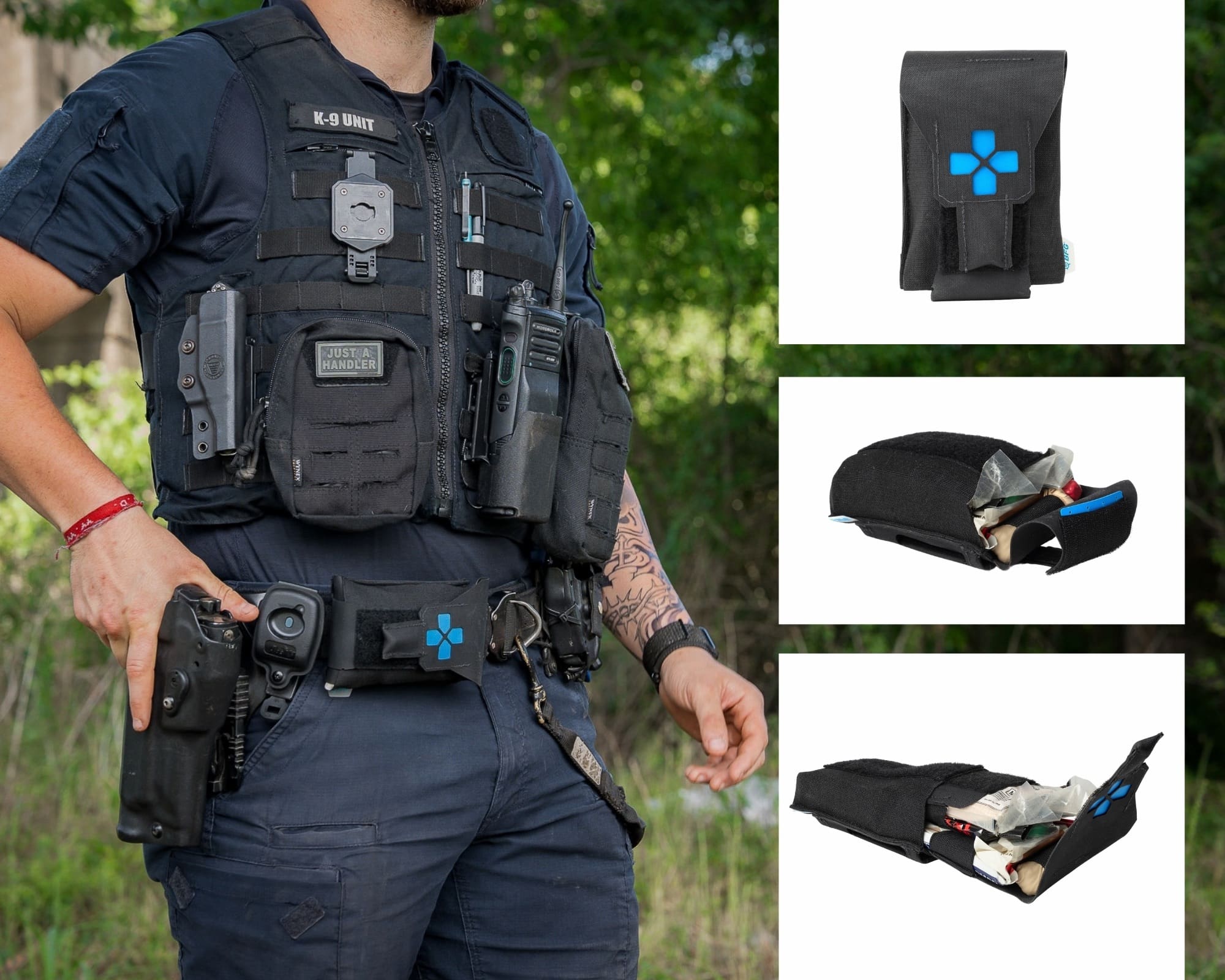
Whether you’re evaluating an existing setup or building a medical capability from the ground up, Blue Force Gear’s trauma kits are designed to provide rapid access, consistent placement, and secure organization so responders can focus on the problem in front of them, not the equipment on their belt.
Explore the Micro Trauma Kit NOW!® Nano ES, and the full line of Blue Force Gear trauma kit solutions.
This article is intended for general educational purposes and is not a substitute for certified medical training, agency protocols, product instructions, or guidance from qualified medical professionals.
By John Chapman, Task Force 70 Foundation
About the Author
John Chapman, known widely as Chappy, is a law enforcement professional with more than 34 years of experience spanning operations, leadership, curriculum development, applications engineering, and training. A published author and nationally recognized instructor, he has spent nearly three decades developing and delivering patrol and tactical law-enforcement training programs.
Chappy currently serves as Executive Director of the Task Force 70 Foundation, a nonprofit dedicated to training, mentoring, and supporting underserved rural and small-town law-enforcement agencies throughout the United States.
Read the full article here
